
Chưa được phân loại
Why I Switched to Rabby: A Browser Extension Wallet that Finally Feels Built for DeFi
Okay, so check this out—I’ve been using browser wallets since before NFT hype broke the news cycle. Whoa! The early ones were clunky, confusing, and often felt like a UX afterthought. My instinct said there had to be a better middle ground between powerful DeFi features and everyday usability. Initially I thought that meant sacrificing security for convenience, but then realized that a smart design can give you both if you prioritize clear permissioning and smart defaults.
Rabby hits a lot of those notes. Really? Yes. It’s a browser extension that treats Ethereum and EVM chains like a first-class citizen, not an afterthought. That matters because most of my DeFi work happens in tabs—trading, bridging, contract interactions—and I don’t want to constantly guess what the wallet is doing behind the scenes. On one hand Rabby simplifies approvals and wallet switching, though actually, wait—let me rephrase that—what it really does is surface information you need when you need it, which reduces dumb mistakes.
Here’s the thing. Security isn’t glamorous. Hmm… What bugs me about most wallets is the permission dialog that hides the gas, the contract, or the spender details. Wow! Rabby forces more transparency by default, showing approvals and grouping them, and that small nudge changes behavior. My first impressions were warm, but then I dug into the UX for complex flows like permit approvals and contract-based interactions, and I kept discovering thoughtful little touches—tooltips, clearer revoke paths, and a better token labeling system.
Installation is straightforward. Seriously? Yes—add the extension to Chrome or Chromium-based browsers, create (or import) a seed phrase, and you’re off. But don’t be lazy—backup the seed phrase off-device. Something felt off about people treating seed phrases like an afterthought, so I moved mine to a hardware wallet for high-value accounts. For most daily interactions, Rabby’s extension behaves like a sane bridge between web dApps and your keys, though you should still follow basic hygiene: unique passwords, passphrases where possible, and never share your seed.
Functionality-wise, Rabby is more than an Ethereum wallet. Whoa! It supports multiple EVM chains with network-aware permissions and chain-specific gas recommendations. This is very very important if you hop between Arbitrum, Optimism, and other L2s—the wrong gas estimation can ruin a trade. I liked the bulk revoke feature the first time I needed to clean up old approvals; it felt like spring cleaning for my wallet. Also, the transaction simulation feature (oh, and by the way…) adds a layer of confidence by previewing contract calls before you sign.
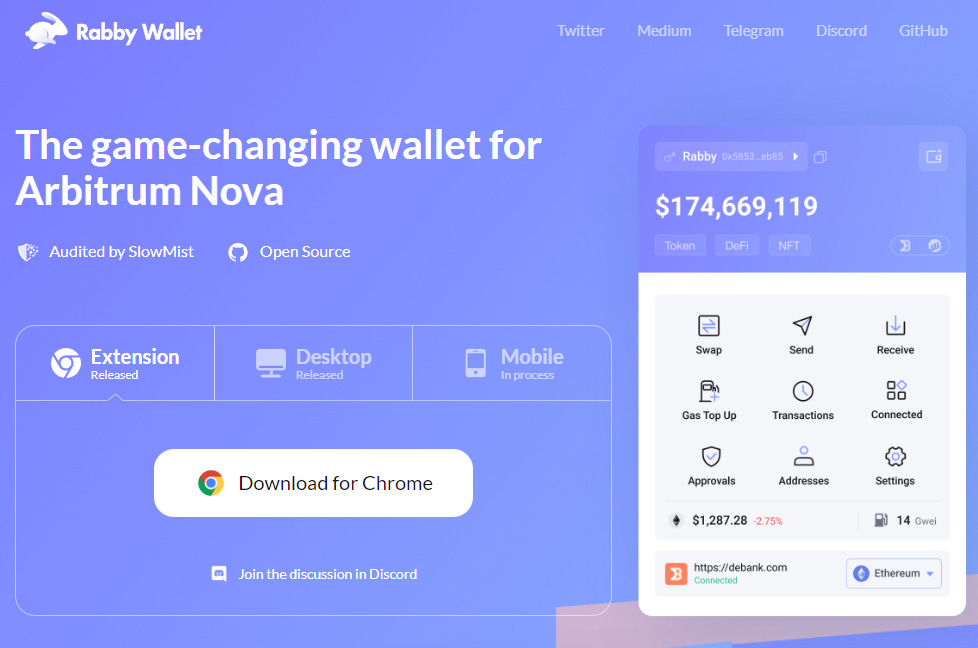
How to get started (and why I link this here)
If you want to try it, grab the extension from the official source and follow the setup prompts for a secure install. Whoa! For a direct start, here’s a convenient place for a verified installer link: rabby wallet download. Seriously, verify the extension ID in the store and double-check the publisher—phishers exist and will try to copy the branding. My rule: download, then check permissions; if somethin’ smells off, remove it immediately and reinstall from the official store.
Once installed, create a new wallet or import an existing seed. Hmm… My habit is to create multiple accounts: one for small daily swaps, one for protocol interactions, and one cold account for long-term holdings. That segmentation reduces blast radius when a dApp asks for broad access. Rabby makes account switching quick, and it supports custom RPCs so you can test things on testnets before going live. Initially I thought custom RPCs would be fiddly, but Rabby handles them cleanly and remembers your favorites.
Let’s talk UX specifics. Whoa! The transaction confirmation UI shows the spender and the exact approval details. This is a tiny change from other wallets, but it stops a lot of accidental approvals. I noticed fewer “oops I approved unlimited spend” moments after switching. On the analytics side, Rabby offers some insights into gas spend and approval history, which helps when you’re trying to audit your own behavior. I’m biased, but that kind of transparency should be standard everywhere.
On the security front, Rabby is good but it’s not a hardware wallet. Really? Yes—software wallets always have inherent trade-offs. Use hardware wallets for high-value operations. However, Rabby’s approach to isolating permissions, adding revocation tools, and giving clearer transaction diffs reduces risk meaningfully. Actually, wait—let me rephrase that—Rabby doesn’t replace secure practices; it encourages them. If you combine Rabby with Metamask-like habits, you get an upgraded workflow without inventing new attack surfaces.
Performance and compatibility are solid. Whoa! I used Rabby across multiple dApps—AMMs, NFT marketplaces, and lending platforms—and it behaved predictably. On one site it flagged a suspicious contract call that other wallets glossed over; that saved me from signing garbage. There are occasional edge cases with niche dApps, but Rabby’s devs are active and the extension updates regularly. That responsiveness matters more than features sometimes, because bugs in wallet code can be catastrophic.
Developer-minded folks will appreciate the advanced settings. Hmm… You can tweak gas presets, enable simulation, and configure multisig integration paths. I like this because it lets power users customize behavior without forcing complexity on newcomers. My instinct said the learning curve would be steep, though actually most users pick up the essentials in a single afternoon. There’s also good documentation and community support which helps when things go sideways.
Now for some honest gripes. Whoa! The UI could be smoother around token labeling in rare cases, and sometimes imported tokens get odd symbols that require manual cleanup. I’m not 100% sure why this still happens, but it’s a minor annoyance. The extension also occasionally prompts for permissions in ways that seem redundant—small UX friction that could be streamlined. But overall these are quibbles rather than dealbreakers.
Practical tips from my workflow. Whoa! 1) Use account segmentation: hot, warm, and cold. 2) Revoke unused approvals monthly. 3) Simulate high-value transactions before signing. 4) Pair Rabby with a hardware wallet for big moves. These habits took me a while to learn, and they saved me from somethin’ like a sloppy approval on a new AMM. Seriously, this is low-hanging fruit for reducing risk.
Comparisons: Rabby vs MetaMask and others. Hmm… MetaMask is ubiquitous and widely trusted, though it sometimes feels bloated and opaque. Rabby is leaner in permissioning and clearer in approvals, which I find more intuitive for DeFi power-users. On the flip side, MetaMask has broader marketplace mindshare and certain integrations that Rabby is still catching up on. On balance, Rabby is an excellent alternative if you want clearer permissioning and better revoke tools.
Community and ecosystem support matters. Whoa! A healthy plugin ecosystem, active GitHub, and transparent changelogs tell you a team is serious about security and usability. Rabby checks those boxes better than many newer wallets. I’m biased because I follow the project closely, but the responsiveness to security reports and the cadence of releases gives me confidence. If you’re building or interacting with complex contracts, community trust and a responsive dev team matter a lot.
FAQ
Is Rabby safe to use for everyday DeFi?
Short answer: yes, with proper practices. Wow! For daily trades and small protocol interactions Rabby provides strong UX and helpful safety nudges. Long-term holdings should still use hardware wallets or cold storage because browser extensions can be targeted by phishing or browser malware.
Can I import my MetaMask wallet into Rabby?
Yes. Seriously—export your seed/private key from MetaMask and import into Rabby, or use the same seed phrase. Be careful during export: do it offline when possible, and never paste seeds into random sites. Something felt off the first time I exported a seed, so I did it in a secure environment and double-checked everything.